Amigurumi & Toys

 Get the Free Printable PDF Pattern
Join the CrochetRooms newsletter and we’ll email you the printable PDF version of this pattern.
Table of Contents
The good news: once you know what to look for, choosing among crochet amigurumi patterns becomes part of the fun. With thousands of designs online, finding the right one is a skill of its own. This guide shows you how to spot a great pattern, when free is enough, when paid is worth it, how to read Japanese charts, and how to pick the right difficulty.
A well-written pattern feels like a friend guiding your hands. A poor one feels like a riddle. Here is how to tell the difference before you work your first stitch.
A great pattern starts with clarity: every round lists its exact stitch count in parentheses, so you can check your work as you go. Materials are specific (yarn weight, hook size, eye size), abbreviations are defined, and there are photos of the finished piece from more than one angle.
Look for the details that signal care: notes on where to place the safety eyes, guidance on stuffing, and the order to assemble the parts. When you compare crochet amigurumi patterns, the ones with thorough testing and clear counts always win. Reviews and finished-project photos from other makers are gold: they show you what the toy really looks like in ordinary hands.
Free patterns are wonderful, and many designers publish genuinely excellent ones. Darling Maple Designs, for example, shares free no-sew patterns on her blog with full video tutorials, alongside premium PDFs for makers who want a printable version.
Paid patterns usually buy you polish: more step-by-step photos, printer-friendly layouts, and extra support from the designer. Pocketyarnlings offers free heart tutorials on the blog plus an 11-page ad-free PDF with photo tutorials for a few dollars. Neither option is automatically better. The best crochet amigurumi patterns, free or paid, share the same traits: accurate counts, clear photos, and honest difficulty ratings.

Some of the cutest amigurumi ever designed live in Japanese pattern books, and you do not need to read Japanese to use them. Japanese crochet uses symbol charts: a visual map where each symbol is a stitch. Learn the handful of symbols once, and you can read any chart in the world.
The core symbols are simple: an oval mark is a chain, an X or plus is a single crochet, a T is a half double crochet, and a T with one slash is a double crochet. Rounds are numbered, and increases and decreases have their own marks. Keep a symbol key beside you for the first project, and by the second you will barely glance at it. Collectors of crochet amigurumi patterns often call Japanese books their secret weapon, and the charts make following along surprisingly relaxing.
Patterns are usually labeled beginner, intermediate, or advanced. Beginner means simple shapes, basic stitches, and minimal sewing. Intermediate adds color changes, more parts, or trickier shaping. Advanced brings complex construction and fine detailing.
Be honest about where you are: a confident beginner can tackle most small animals, while a first-timer should start with a ball, heart, or octopus. The right difficulty makes the difference between a joyful evening and a tangled one. Browse our Amigurumi & Toys collection and all our patterns for ideas at every level, and let your shelf of crochet amigurumi patterns grow with your skills.
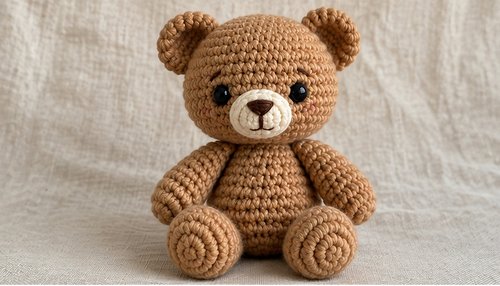
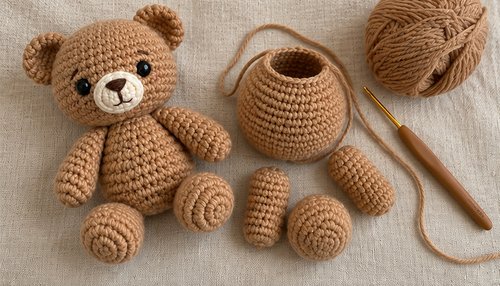
Ready to put your pattern-reading skills to work? We have written a small teddy bear pattern as a printable PDF: head, body, ears, muzzle, arms, and legs, with clear rounds and stitch counts throughout. It is free for our newsletter subscribers. A timeless favorite among crochet amigurumi patterns, the teddy bear is a classic first real project for new amigurumi makers. Just use the signup box at the top of this article.

Designer blogs, YouTube tutorials, and pattern libraries are full of free crochet amigurumi patterns. Look for designers with an established site and finished-project photos from other makers, which signal a tested, trustworthy pattern.
Often, yes. Paid patterns usually include more photos, cleaner layouts, and designer support. But many excellent free patterns exist too: judge each pattern by its clarity and stitch counts, not its price tag.
Check that every round lists a stitch count, that materials are specific, and that there are photos of the finished piece. Maker reviews and photos of finished toys are the strongest proof of quality.
Each symbol is one stitch: an oval is a chain, an X is a single crochet, a T is a half double crochet, and a slashed T is a double crochet. Learn these four and you can follow most Japanese amigurumi charts.
You usually do not need to convert anything: just use the hook size that gives tight stitches with your new yarn. The toy will come out bigger or smaller, but the shaping math stays the same.
No. Purchased patterns are licensed to you alone. Send your friend the link to buy their own copy: it supports the designer who created it.