Accessories
 Get the Free Crochet Pencil Case Pattern
Join the CrochetRooms newsletter to download the free printable PDF pattern.
There is something quietly satisfying about reaching into your bag and finding every pen exactly where you left it. A crochet pencil case is small, sturdy, and full of personality, and it turns a jumble of pens into a tidy bundle you enjoy carrying. It is quick to finish, easy to personalize, and just as welcome on a school desk as on a craft table.
If you love small, useful makes, you may also enjoy browsing our crochet pouch ideas, which share the same charm: practical, pretty, and made to be used every day.
A good pencil case does more than hold pens. It protects them from getting lost at the bottom of a bag, keeps sharp points away from your other belongings, and gives your everyday tools a soft, handmade home.
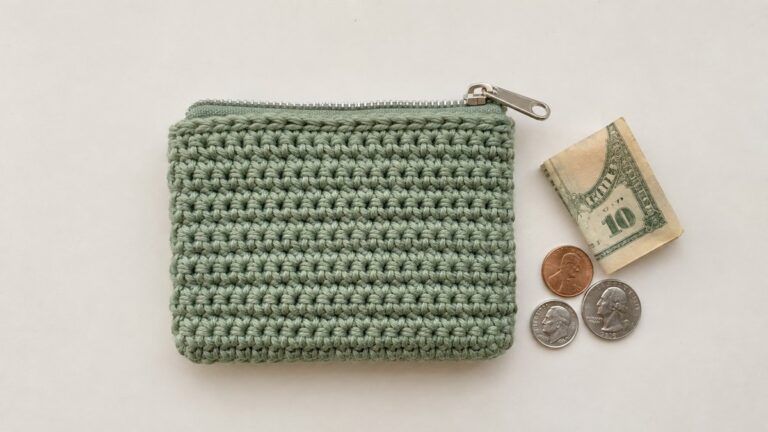
The best crochet pencil cases stay compact but firm. Tight single crochet stitches and sturdy cotton yarn help the case hold its shape, so it does not slump when half full or flatten when tossed into a tote. A firm case also protects pen tips and keeps everything inside easy to find.
Pencil cases are wonderful gifts because they feel personal without taking a long time to make. A student can use one daily, a teacher can keep one on a desk, and a maker can fill one with hooks, needles, or markers instead of pens.
Look for three qualities: sturdiness, a secure closure, and a size that fits real pens. Sturdiness comes from tight stitches and a yarn that holds its shape. A zipper keeps everything safely inside, while a lining stops small items from slipping through the gaps between stitches. The size should fit standard pens and pencils with a little room to spare.
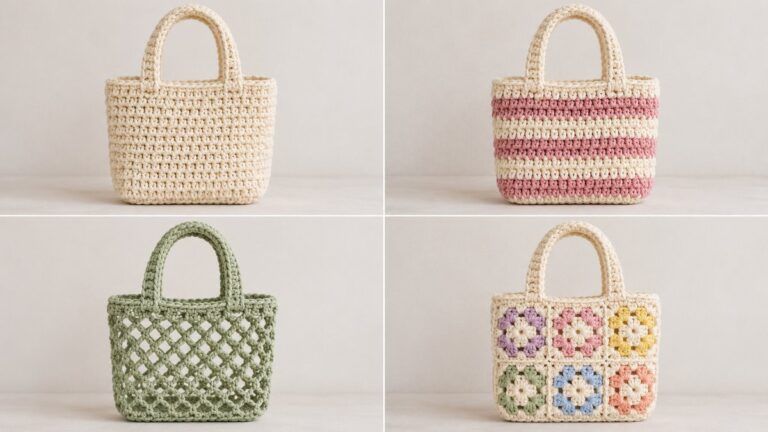
One of the joys of this little item is how many directions it can take. The same simple pouch shape can look classic, colorful, romantic, or playful, depending on color and texture.
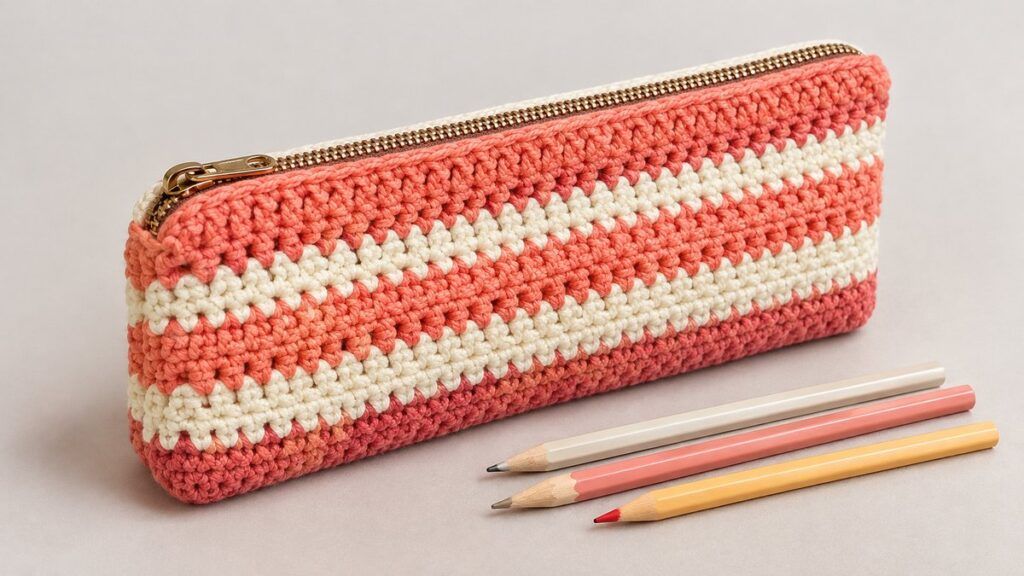
Stripes are a timeless place to start. Changing color every row gives a clean, cheerful look, and a spike stitch adds a textured stripe that looks rich even in simple colors. A well-known striped design uses 4-ply cotton yarn and a 3.5 mm hook, finishes at about 8.5 by 4.25 inches, and takes a zipper of about 8 inches. You can read the original free design on Annie Design Crochet for inspiration.
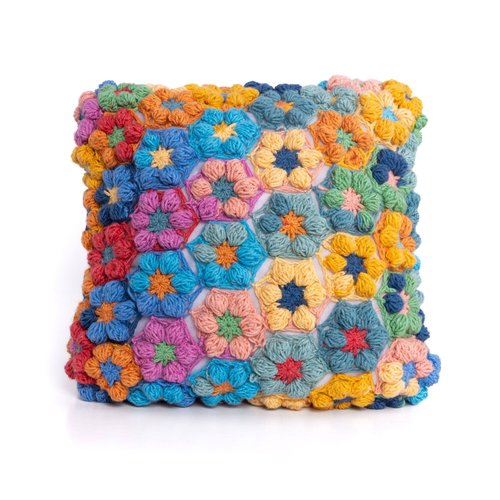
If you love color, granny squares are a beautiful next step. Two or three squares joined on each side make a cheerful patchwork case, and scrap yarn in bright colors turns leftover balls into something useful. Floral squares in soft colors look romantic, while bold squares in rainbow colors look joyful and fun.
For a softer, more playful feel, a crayon design is hard to beat. Two shades of one bright color, with dark stripes near one end, turn an ordinary pouch into a cheerful crayon shape that makes children smile. A popular crayon design uses 4-weight worsted yarn and a 5 mm hook, and finishes at about 5 inches tall by 10.5 inches wide after seaming. You can read the original free design on Sunflower Cottage Crochet for inspiration.
For the striped design featured in the printable pattern, the source uses 4-ply cotton yarn, such as Baby Pure Cotton from Anchor Crafts, with a 3.5 mm hook. The finished case measures about 8.5 by 4.25 inches, and the zipper is about 8 inches long. The source does not state a yarn amount or a gauge figure, so no yardage or gauge is given here.
For comparison, the crayon design uses about 200 yards of 4-weight worsted or aran yarn with a 5 mm hook, and finishes at about 5 inches tall by 10.5 inches wide after seaming. Its source states that gauge is not important for the project, as long as you are happy with your tension.
Small, everyday crochet pieces share a similar logic: sturdy, compact, and easy to carry. Our crochet phone case ideas follow the same idea, with cotton yarn and a neat, protective finish.
Start with the person who will use it. A calm maker may love cream, sage, or soft blue. A bold student may prefer deep red, mustard, or a bright rainbow stripe. Two or three colors are enough for a classic look, while a full rainbow suits a playful case.
Then choose your closure. A zipper is the most secure choice and suits a case that travels in a bag every day. A button flap or a simple tie closure works well for a case that stays on a desk or holds crochet hooks at home. If you add a lining, choose a light fabric so small items stay visible, and sew the zipper in with strong thread. Our crochet kindle sleeve ideas use the same thinking, with a snug fit and a finish that protects what is inside.
Sturdy cotton is a strong choice because it is smooth, firm, and holds its shape well. It gives clear stitch definition and stands up to daily use in a bag. A 4-ply cotton suits a neat, compact case, while a 4-weight worsted or aran yarn makes a slightly softer, roomier one.
About 8.5 by 4.25 inches works well for standard pens and pencils, with room for a few extras. A slightly longer case, about 10.5 inches wide, suits longer pencils and markers.
Neither is strictly essential, but both help. A zipper keeps pens safely inside when the case is tossed into a bag, and a lining stops small items from slipping through the gaps between stitches. If you skip the lining, work your stitches tightly so the fabric stays firm and closed.
Yes, it is an excellent beginner project. It uses basic stitches, works up quickly, and needs only a small amount of yarn, so a new crocheter can practice even tension and neat finishing without committing to a large piece. It is also a gentle way to learn neat finishing and how to sew in a zipper.