Home & Seasonal
 Get the Free Crochet Placemat Pattern
Join the CrochetRooms newsletter to download the free printable PDF pattern.
There is something quietly lovely about sitting down to a table dressed with handmade crochet placemats. They soften the table, protect the surface, and turn an ordinary meal into a small occasion. A crochet placemat is practical, pretty, and quick to make, and a favorite for everyday tables and holiday gatherings alike.
If you love dressing the table by hand, you may also enjoy our christmas crochet table runner ideas, which pair beautifully with matching placemats.
A placemat does more than look pretty. It protects the table from hot plates and water rings, it catches crumbs, and it gives each place setting a finished frame. In crochet form, it also adds texture and warmth that a flat fabric mat cannot match, and it can be made in any color to suit your plates or your season.
The best crochet placemats balance beauty with use. An open, lacy stitch looks delicate, yet a cotton yarn keeps the mat sturdy enough for daily meals. A rectangular mat suits a formal table, while a round one feels relaxed and friendly.
A crochet placemat is a satisfying weekend project. One mat uses only about 135 yards of yarn, and a set of four dresses a whole table. That small size makes it a wonderful stash buster too: a few balls of cotton are all you need to start.
Look for three qualities: a flat, even shape, a sturdy cotton yarn, and a size that fits your plates. The mat should lie flat without curling at the edges, which is why blocking matters for lacy designs. Cotton is the classic choice because it is durable, keeps its shape well, and is machine washable. The finished size should leave a little space around the plate, about 11.5 by 13.75 inches for a standard rectangular mat.
One of the joys of this little project is how many directions it can take: lacy and delicate, round and scalloped, or bold and colorful.
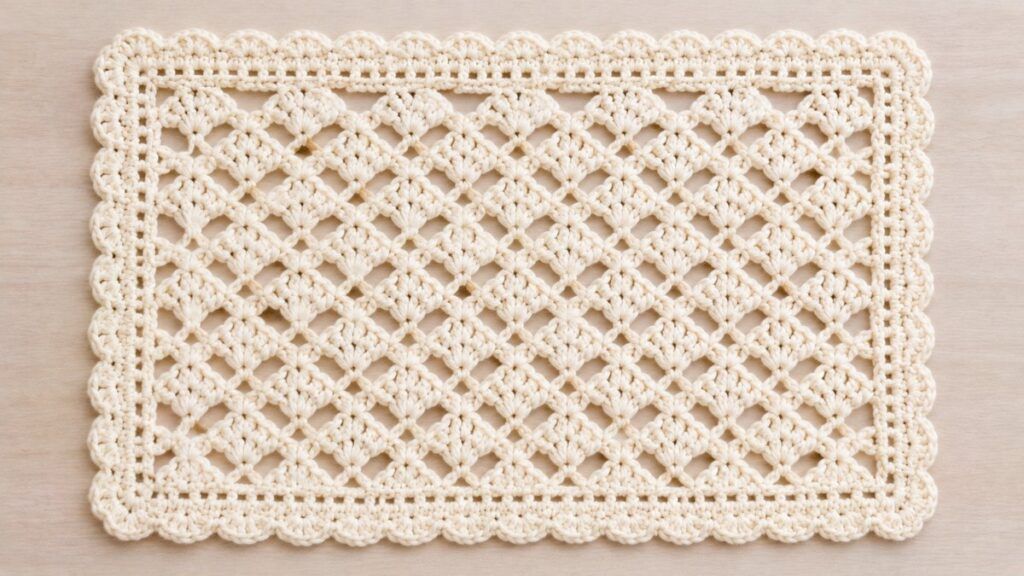
Lace is the classic placemat look. An open diamond mesh in soft cotton looks light and airy, and it shows off the stitch pattern beautifully once it is blocked. The design used for our printable pattern is a cottage garden lace worked in rows, with a simple two round border. You can read the original free design on Bella Coco Crochet for inspiration.
Round placemats feel soft and friendly, and a scalloped shell edge gives them a finished look with no extra work. Most round designs start with a magic ring and grow in rounds, which makes them easy to size up or down. A matching set in one color looks calm and classic, while mixed pastels feel fresh and playful.
If delicate lace feels too quiet, try a bold mandala. A round mandala placemat in a deep burgundy or a bright mustard makes a strong centerpiece for the table, and the circular pattern shows off color changes beautifully. Mandalas also work well in cotton, which keeps the mat flat and sturdy.
For the design featured in the printable pattern, the source uses Yarnsmiths Cotton, 100 percent cotton, Aran weight (4), with 50 grams and 80 meters (87 yards) per ball. Each placemat uses about 135 yards. The main body is worked with a 4.5 mm hook, with a 4 mm hook also listed, and the finished placemat measures 29 by 35 cm, or 11.5 by 13.75 inches. Gauge is 10 stitches and 8 rows per 10 cm (4 inches) after blocking. The source does not state a skill level.
That size is a useful guide for most tables. A standard rectangular mat of about 11.5 by 13.75 inches leaves a neat frame around a dinner plate, while a round mat of about 15.5 inches across does the same job with a softer shape. A well known kitchen set pattern offers five sizes, from a small coaster to an extra large placemat, in the same stitch. You can read that versatile design on MJ’s Off The Hook Designs for inspiration.
Table linens share the same logic: sturdy cotton, a flat finish, and a size that suits the table. Our crochet coasters ideas follow the same idea, and our crochet potholders roundup is a good place to find the next piece for your kitchen.
Start with your table. A soft cream or sage suits an everyday table, a deep burgundy or forest green suits autumn and winter, and a bright coral or sunny yellow suits summer. One color is enough for a classic look, while a second color for the border adds a tidy frame without extra work.
Then choose your finish. Blocking is the step that makes a lacy placemat truly shine: block before adding the border and again after, so the open stitch pattern sits flat and even. A light steam helps a cotton mat lie flat, and a little starch can stiffen the fabric if you like a crisp look.
One hundred percent cotton is the best choice, because it is durable, keeps its shape well, and is machine washable. Cotton also resists heat better than acrylic, which matters for hot plates. Save soft acrylic blends for decorative pieces and use cotton for mats that will see daily meals.
A standard rectangular placemat measures about 11.5 by 13.75 inches, which frames a dinner plate neatly. Round placemats are often about 15.5 inches across. If your plates are large, add a repeat or two to the pattern, and always check the finished size against your own plates before making a full set.
Cotton yarn is generally machine washable, which is one reason it is the classic choice for placemats. Wash gently, dry flat or on low, and check the care label on your yarn ball first, since care varies by brand.
A simple round or rectangular placemat in basic stitches suits a confident beginner, especially a design worked in rows or rounds with a repeating stitch. Lacy openwork with chain spaces is a little more advanced, so a first placemat is best kept simple, with the lace saved for a second attempt.