Blankets


 Get the Free Printable PDF Pattern
Join the CrochetRooms newsletter and we’ll email you the printable PDF version of this pattern.
Table of Contents
Some blankets take months. A chunky crochet blanket pattern free of fussy details can take a weekend. There is something deeply satisfying about super bulky yarn: every stitch is visible, every row adds real height, and a throw that would take forty hours in worsted weight comes together in a handful of cozy evenings. If you have never crocheted with thick yarn, prepare to be converted.
The appeal is simple. Thick yarn plus a big hook equals fast progress and maximum coziness. A chunky crochet blanket pattern free from complicated stitch work is the perfect antidote to slow, fiddly projects: you pick it up on Friday evening and you are draping it over your couch by Sunday night.
A #6 super bulky yarn is roughly twice as thick as worsted weight, which means each stitch covers about twice the ground. A gauge of 9 double crochets per 4 inches is typical with a 10 mm hook, compared to 14 or more in worsted. Fewer stitches per row, fewer rows per inch, and suddenly a full throw needs only a fraction of the work. That math is the whole promise of a chunky crochet blanket pattern free from fussy stitch work.
That speed changes how a project feels. Instead of a blanket that lives in a basket for three months, a chunky crochet blanket pattern free of long repeats becomes a sprint: you can see real progress every single evening, which keeps motivation high from the first row to the last. Makers at The Crochet Village built their whole Rolling Hills ripple throw on this idea: super bulky yarn and a memorizable two-row repeat, finished in a few evenings.
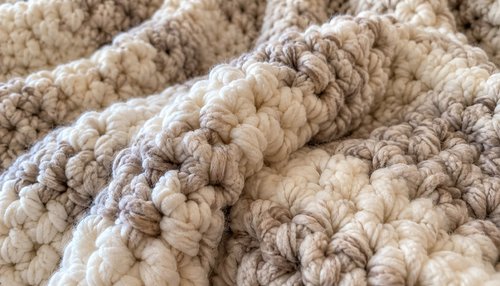
For #6 super bulky yarn, hooks from 9 mm (US M/N-13) to 12 mm (US O-17) are the sweet spot. A 9 mm hook gives a denser, warmer fabric with beautiful stitch definition; a 12 mm hook makes a softer, drapier throw that works up even faster. Go much smaller and your hands will ache; go much larger and the fabric turns into netting.
Look for super bulky yarns with around 100 to 200 yards per skein: chenille-style yarns for cloud-soft baby blankets, wool-blend super bulkies for the warmest winter throws, and acrylic super bulkies for easy-care couch blankets. A 40 by 48 inch throw typically needs about 1,000 yards, which is five or six skeins depending on the brand. Buy them all at once so the dye lots match.
Thick yarn is honest: it shows every stitch, so simple textures look spectacular. Alternating rows of double crochet with back-loop half double crochet makes a plush ribbed fabric. Front-loop-only work creates a knit-look ridge that Life and Yarn used to brilliant effect in their chunky knit-look blanket, worked entirely in front loops with basic stitches.
Avoid tiny, intricate stitch patterns: they get swallowed by thick yarn and waste its best quality. Big, bold textures win here. Two-row repeats are the ideal format for a chunky crochet blanket pattern free of frustration: memorize them in the first ten minutes, then settle into the rhythm. Browse our Blankets collection for more throw ideas, check all our patterns, or see how the same cozy spirit works in our cozy winter scarf.
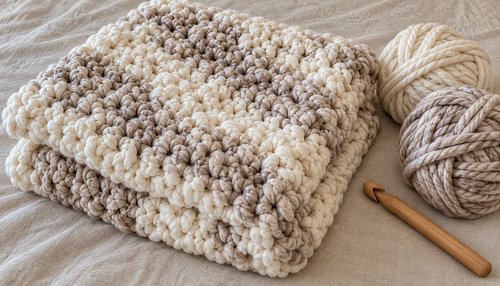
Here is a realistic timeline for a 40 by 48 inch throw. Friday evening: wind your yarn, make a gauge swatch, and work the first few rows. Saturday: the long, happy middle, several hours of rhythmic stitching while a show plays. Sunday: finish the last rows, add a simple border, and weave in your ends. Total stitching time lands around 10 to 14 hours, which is genuinely a weekend of relaxed making. It is hard to beat a chunky crochet blanket pattern free of long, boring repeats for pure weekend satisfaction.
Keep your tension relaxed; gripping thick yarn too tightly is the number one cause of sore hands. Take breaks, stretch your fingers, and let the hook do the work. A chunky crochet blanket pattern free of tight, fussy stitches should feel like a treat, not a workout.
Ready for your weekend make? Our free PDF has the complete chunky crochet blanket pattern free of charge: a two-row ribbed texture, real gauge and yardage for a 40 by 48 inch throw, a two-tone stripe option, and a simple border. It is free for our newsletter subscribers. Just use the signup box at the top of this article.
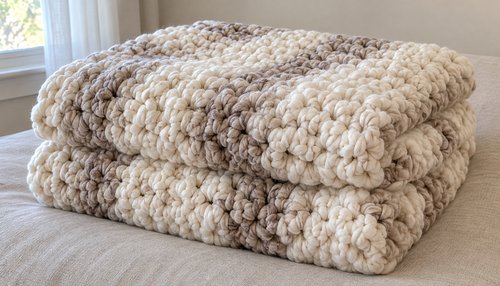
Yes, it is one of the best beginner blanket projects. The stitches are large and easy to see, simple two-row repeats are easy to memorize, and you finish fast enough to stay motivated.
Most #6 super bulky patterns use hooks from 9 mm to 12 mm. A 10 mm (US N/P-15) hook is a great middle ground: warm, dense fabric without hand strain.
A 40 by 48 inch throw in #6 super bulky uses about 1,000 yards, roughly five to six skeins. Thicker chenille yarns may need a bit more because they are lighter per yard.
Most crocheters finish a throw-sized chunky blanket in 10 to 14 hours of stitching. That is a dedicated weekend, or a week of relaxed evenings: the classic chunky crochet blanket pattern free weekend win.
Check the yarn label. Most acrylic super bulky blankets can be machine washed on gentle and tumble dried low. Wool blends and chenille yarns should be washed gently and dried flat to keep their softness.
Wavy edges usually mean the turning chain is too tight or too loose compared to your stitches. Count your stitches every few rows, and keep your turning chain the same tension as the rest of the row.