Home & Seasonal

 Get the Free Crochet Tapestry Pattern
Join the CrochetRooms newsletter to download the free printable PDF pattern.
In this article:
There is something quietly joyful about a crochet tapestry on the wall. It is soft where framed art is hard, handmade where prints feel mass produced, and full of color without shouting for attention. A crochet tapestry turns simple single crochet stitches into a picture you can hang, and the bee design at the heart of this piece is one of the sweetest examples of the style.
If you love wall hangings but have never tried colorwork, this is a wonderful place to begin. The picture builds slowly, row by row, and watching the bee appear feels a little bit like magic.
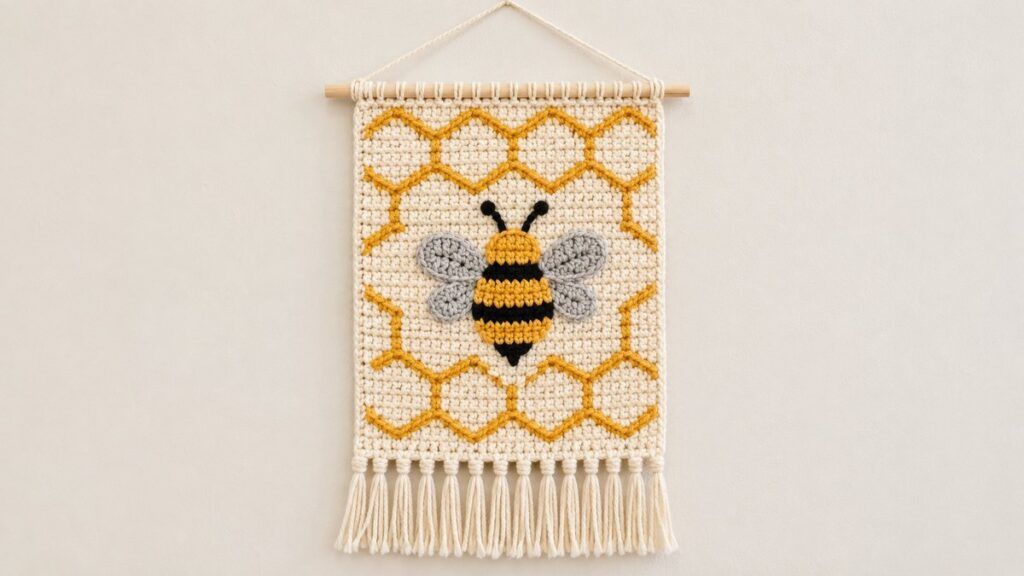
A crochet tapestry is a flat panel worked in single crochet, with the picture formed by changing yarn colors as you follow a chart. Each square on the chart stands for one stitch, so the design appears stitch by stitch, much like cross stitch on fabric. The technique is often called tapestry crochet or intarsia crochet, and it is the same idea behind many beloved wall hangings, including the cheerful Bee Happy Wall Hanging, where a sweet bee sits among honeycomb shapes on a cream background.
Unlike a blanket or a garment, a tapestry does not need to fit anyone or drape a certain way. That freedom is part of its charm. The panel simply needs to hang straight, lie flat, and show its picture clearly, which makes it a forgiving and relaxing project for makers who enjoy steady, rhythmic stitching.
Wall hangings have a warmth that other decor cannot quite match. Yarn softens a room, absorbs a little sound, and adds texture to plain walls in a way that flat art cannot. A crochet tapestry also carries the story of the hands that made it, which is why it feels so at home in bedrooms, nurseries, and cozy reading corners. If you enjoy this kind of handmade wall decor, you may also love our crochet wall hanging ideas for more inspiration.
The bee tapestry has a fresh, storybook feel. The cream background keeps it light and airy, the honey yellow pops without overwhelming the room, and the small touches of black and grey give the bee its friendly shape. A honeycomb pattern frames the design, so the whole panel reads as one complete picture rather than a motif floating on its own.
Finished with a wooden dowel at the top and a soft knotted fringe at the bottom, it has the relaxed finish that suits farmhouse, cottage, and nursery decor so well.
Hang it where you will see it every day: above a desk, beside a bed, or in an entryway that needs a little warmth. Because the palette is mostly cream with small amounts of yellow and black, it pairs beautifully with natural wood, white walls, and soft linen. It is cheerful without being loud, which is exactly why bee and honey themes stay popular season after season.
For a wall hanging, a medium weight cotton or cotton blend yarn is a lovely choice. Cotton holds its shape, shows the stitches crisply, and keeps the panel from stretching out of shape over time. The original bee design uses worsted weight yarn in cream, yellow, black, and grey, and that balance is worth keeping: one generous main color, one bright accent, and small amounts of dark and neutral tones for detail.
If you prefer a softer look, you could swap the bright yellow for a muted honey shade, or use a warm white instead of a stark cream. Just keep the contrast between the bee and the background strong, because clear contrast is what makes the picture readable from across the room. Color confidence matters here too, and the same principle applies to bold colorwork pieces like our mosaic crochet blanket, where light and dark yarns do all the talking.
A tapestry of this size, roughly the size of a small poster once the dowel and fringe are added, fits almost anywhere. It looks lovely in a nursery, where the bee theme feels playful and gentle, and it works just as well in a kitchen nook or a home office that could use a handmade touch. Keep it out of direct sunlight and away from damp walls so the colors stay fresh and the yarn stays in good shape.
For a fuller wall display, try hanging it beside a small shelf with a plant or a candle, or pair it with a second textile piece. Mixed textures, like a woven basket or a simple framed print, make the crochet panel stand out even more. Another sweet option in the same spirit is the Little Hearts Tapestry Wall Hanging, which uses the same tapestry technique for a romantic heart design.
One of the best things about a crochet tapestry is how easily it moves with your decor. In spring and summer, it feels bright and fresh on its own. In autumn, layer it with warm throws and wooden accents nearby and it settles right into the season. It also makes a thoughtful handmade gift, especially for a baby shower, a housewarming, or a friend who loves bees.
If you love the panel format, you can use the same idea for other rooms. The flat panel is wonderfully versatile, and a similar sense of balance shapes our granny square blanket layout guide, where small squares come together into one pleasing whole.
Not at all, as long as you are comfortable with single crochet. The stitches themselves are simple. The skill is following the chart and changing colors at the right moment, and that becomes natural after the first few rows. This bee tapestry is a perfect first colorwork piece.
A worsted weight cotton or cotton blend yarn is ideal. It gives crisp stitch definition, holds the panel flat, and hangs nicely without stretching. Acrylic or a cotton acrylic blend also works well, especially if you prefer a softer drape.
Keep your tension even, especially through color changes, and block the finished panel before hanging it. Blocking gently evens out the edges and helps the whole piece lie flat against the wall.
Yes. The dowel gives a clean, straight top edge and a classic wall hanging look, but you could also hang the panel from a slim branch or a decorative rod. Just make sure whatever you choose is slightly wider than the panel so the edges hang evenly.